LeafJoinPlant connections, made visible.Read an actual new shoot

What stays
with this leaf?

A conceptual main stem with side leavesOne selected leaf joins the main stem through its petiole. A bud lies in the angle above that attachment. Other leaves remain with the unselected stem. A hypothetical separation shows which structures remain together. leaf bladepetiole / leaf stalk axillary budstem node A conceptual main stem with side leavesOne selected leaf joins the main stem through its petiole. A bud lies in the angle above that attachment. Other leaves remain with the unselected stem. A hypothetical separation shows which structures remain together. leaf bladepetiole axillary budstem node

A leaf, on its own stalk.

The petiole joins one leaf to the main stem.

African violet can form plantlets from a leaf-and-petiole cutting. Leaf-cutting method ↗

A stem carries the connection.

The node is the leaf’s attachment. The axillary bud sits above it, between leaf stalk and stem.

Monstera deliciosa needs a stem node and axillary bud retained for new growth. Species-specific map ↗

Imagine separating
Or imagine keeping
The parts are still joined.

Original conceptual anatomy. These hypothetical separations show retained parts, not where to cut your own plant. Identify the plant and check its specific instructions first.
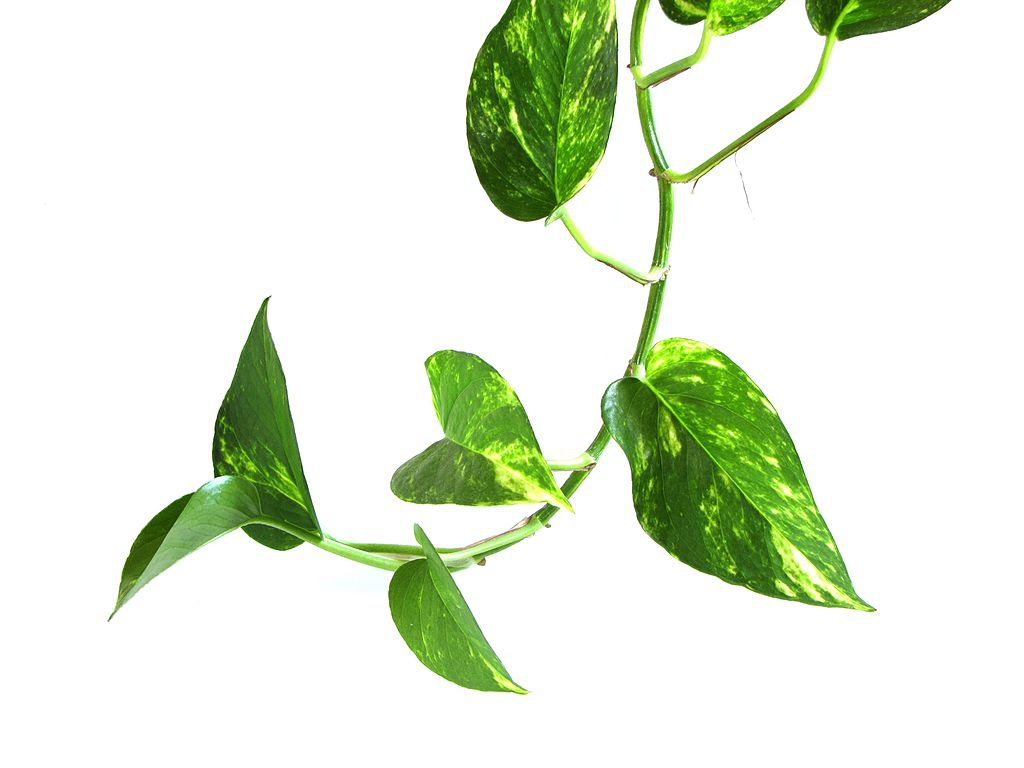
An intact pothos vineTrace an actual vine ↗ZooFari · CC BY-SA 3.0

An actual pothos vine

A curved pothos vine with individual leaves attached by their side stalks

Stay on the same connection.

Begin with the large upright leaf near the top centre. Its narrow green petiole curves down and right until it meets the continuous vine.

At that junction, switch to following the main stem upward. The next leaf stalk joins from the right. Each attachment is a node; the length of stem between two attachments is an internode.

The leaf stalk leads to one blade. The main stem continues past several leaves. That is the connection the two schematic separations keep or leave behind.

Leaves and overlapping stalks hide parts of this photograph. The visible bumps do not establish which buds are alive; this image is useful for tracing attachments.

ZooFari, via NC State Plant Toolbox · CC BY-SA 3.0. Unmodified photograph.Open the original image file ↗